


WhatsApp Business
WhatsApp LLC
I use WhatsApp Business as a practical communication tool rather than as a full customer-service platform. Its main appeal is simple: it puts business conversations in the same familiar messaging environment that many customers already know. That lowers the barrier to contact, especially for small shops, independent professionals, local services, and anyone who would rather answer a message than manage a complicated support system.
The app is developed by WhatsApp LLC and belongs to the communication category. It is free to install, has an Everyone age rating, and is currently listed as version 2.26.21.75 for devices running Android 5.0 or later. Its scale is hard to ignore: it has passed one billion installs and holds a 4.7 average from around 23 million ratings. Those figures suggest a mature, widely recognized product, but they do not remove the need to decide whether its conversation-first design fits the way you actually work.
How connectivity shapes the day-to-day experience
The strongest part of WhatsApp Business appears when both sides are ready to communicate quickly. A customer can ask whether an item is available, send a photo of a problem, confirm an appointment, or request directions without making a phone call. I find this especially useful for short exchanges where email would feel too formal and a normal voice call would interrupt whatever the customer is doing.
Related News

Why Contacts is Your Go-To App for Effortless Network Management

Why Snapchat Keeps Users Coming Back for More
That convenience is also tied directly to the network. Messages, photos, voice notes, and other conversation activity depend on a working connection, so the app feels most responsive when mobile data or Wi-Fi is stable. In a busy street, a crowded venue, a building with weak reception, or a journey between coverage areas, the experience can become less predictable. A message that looks ready to send may not reach the other person immediately, and that matters when the conversation involves a delivery, a booking, or a time-sensitive question.
I recommend treating the chat as a live channel rather than assuming it behaves like a paper notebook. If a customer is waiting outside a location, for example, I would not rely on a single message as the only plan. A clear address, a visible meeting point, or a second contact method can prevent a weak signal from turning a small delay into a missed appointment. This is one of the less obvious trade-offs: the app makes communication feel instant, but the business still needs a sensible process for moments when the connection is not.
Related News

Why WhatsApp Messenger Still Makes Everyday Communication Feel Easy

Jurassic World: The Game Is the Better Dino Tycoon for Strategic Players

Threads in Real Life: Who Should Join, Lurk, or Leave

How SHEIN Turned Shopping Into an Endless Content Feed

How to Make Fortnite Feel Smarter on Mobile

Should You Switch to Microsoft Outlook on Mobile?
For a small business, the familiar interface is a real advantage. Customers generally do not need to learn a special portal before asking a question. That makes the first contact feel personal and accessible. On the other hand, familiarity can encourage people to write at any hour, and a business owner may find it difficult to separate personal time from customer time if every conversation arrives in the same general messaging habit.
Useful mobile workflows for real customer conversations
The app makes the most sense when the person answering is also moving around. A tradesperson can respond between jobs, a market seller can handle questions while standing at a stall, and a tutor can confirm a change of location without opening a desktop help desk. I like this flexibility because the conversation stays close to the work instead of forcing every reply into an office routine.
A realistic example is a small cake business preparing a weekend order. A customer may first ask about flavors, then send an image for decoration ideas, then confirm a collection time. The owner can keep the exchange in one thread instead of searching through separate email chains and phone call notes. The weakness appears when several orders overlap: without a disciplined naming, note-taking, or calendar routine outside the chat, important details can become buried among casual messages.
Gallery
My practical advice is to write replies that stand on their own. Include the relevant date, time, location, and next action instead of sending several tiny messages that depend on context. This helps when the customer returns to the conversation later and also reduces the damage caused by a delayed message. It is a small habit, but it makes a mobile-first workflow much easier to manage.
Photos and voice notes can make a conversation more useful, but they also change the amount of data involved. A customer showing a damaged product may save several rounds of explanation, while a long series of images can consume more mobile data and make the thread harder to scan. I prefer asking for one clear photo first, then requesting another only if it answers a specific question. That keeps the exchange focused and is kinder to people using limited data plans.
Voice notes are convenient when typing is awkward, but they are not always the best business record. A written summary of the agreed price, time, or service can be easier to search and verify later. For that reason, I use spoken messages for quick clarification and written messages for commitments. That distinction is particularly helpful when a conversation involves several steps or another person may need to take over the reply.
What happens when a message does not go smoothly
Connectivity failures are not only technical annoyances; they can create uncertainty about whether a customer has received an answer. If a message remains pending, I avoid immediately sending the same text repeatedly. Duplicate replies can look careless and may confuse the customer once the connection returns. Instead, I check the conversation state, wait for a stable connection, and use another agreed channel only when the situation is genuinely urgent.
This recovery approach is important for businesses that promise quick responses. A short message such as “I’m checking that now and will confirm shortly” is useful only if it actually reaches the customer. When reception is unreliable, I would rather give a realistic expectation during the last successful exchange than promise an exact response time that depends on a network I cannot control.
The same principle applies when changing locations. A mobile worker should send the essential information before entering a weak-signal area, especially if the customer needs an address or access instruction. Keeping the final confirmed details concise makes it easier for the other person to act on them even if the next part of the conversation is interrupted.
There is also a human recovery step: do not assume silence means agreement. If a customer has not replied after a proposed time or price, the business should follow its normal confirmation process rather than treating the lack of a response as acceptance. WhatsApp Business is excellent for making contact, but it does not replace clear operational rules about bookings, payments, cancellations, or handoffs.
Using the app without wasting mobile data
For anyone working mostly from a phone, data-conscious habits make a noticeable difference. Text is usually the lightest way to confirm routine details, while repeated photos, video, and voice messages can make a conversation heavier. I keep media purposeful: one image for identification, one written message for the decision, and a final summary when the customer has agreed to the next step.
It is also worth remembering that a business conversation can contain more than one kind of value. A photo may help solve a problem quickly, but a written description can be more useful when reviewing the exchange later. I try not to use media as a substitute for basic information. “The blue chair” may be clear in a photo today, but “the blue chair from the front window, collection on Saturday afternoon” is much easier to understand when the thread becomes busy.
People who regularly work in areas with expensive or limited mobile data should be selective about which conversations receive media and when. A customer may appreciate a short clip demonstrating a service, but sending large files to every contact can slow the workflow and increase costs. The best balance is to use the smallest format that answers the question, then move back to concise text.
The listed in-app purchase range runs from twenty-nine cents to around two thousand eight hundred dollars per item. That wide range makes me cautious about assuming every business-related expense is necessary. I would review any purchase carefully and distinguish between what is essential to communication and what belongs to a broader business setup. The core app itself is free, which is helpful for testing the workflow before committing money to anything connected with it.
Where it beats ordinary alternatives, and where it does not
Compared with ordinary SMS, WhatsApp Business is better suited to conversations that need richer context, such as a customer sending an image or continuing a discussion over several messages. Compared with email, it feels faster and more natural for short questions, but email can be better when a formal record, long explanation, or attachment-heavy exchange matters. Compared with a phone call, messaging gives both sides time to read and respond, although it can be slower when a complicated issue would be solved in two minutes of conversation.
Its biggest advantage over a dedicated customer-support system is accessibility. A small operator can begin with the communication behavior customers already understand instead of asking them to create another account or learn a ticketing process. Its biggest disadvantage is that a chat inbox can become difficult to control as the number of conversations grows. A larger team may need assignment rules, reporting, structured case histories, and stronger separation between customer requests and internal work. In that situation, a dedicated support tool may be the better foundation, with messaging used as one entry point rather than the entire operation.
I would also be careful about using it as the sole record for financial or contractual decisions. A chat can preserve useful context, but a business should still maintain its own dependable records for orders, appointments, invoices, and policies. This is not a criticism of the app so much as a recognition of its role: it is a communication layer, not a complete replacement for every business system.
Who will benefit most from the mobile-first approach
I think WhatsApp Business is a strong fit for a solo operator who needs to answer customers while away from a desk. It is also appealing for local services where trust and quick replies matter: repair work, beauty appointments, food orders, classes, small retail, and personal consultations can all benefit from a direct conversation channel.
It is less suitable for someone who dislikes constant notifications, needs strict separation between several teams, or handles a volume of requests that would be difficult to track in individual chats. It may also be the wrong choice when customers expect a formal support portal, detailed case numbers, or a carefully controlled approval process. In those circumstances, email, a ticketing system, or a customer relationship platform may provide a clearer structure.
Before adopting it for daily work, I would run a small trial with the kinds of questions the business actually receives. Test a slow-connection situation, a photo-based request, a rescheduled appointment, and a conversation that needs another employee to understand the history. That exercise reveals more than simply installing the app, because it shows whether the business has a workable response routine around the chat.
My connectivity-focused verdict
After using it as a business communication tool, I see WhatsApp Business as a convenient front door rather than a complete office. It is approachable, familiar, and particularly effective when customers need quick answers from a person who is already working on a phone. The free price and broad reach make experimentation easy, while the Everyone rating keeps it accessible to a wide audience.
The important qualification is that its convenience depends on connected conversations and good habits. Weak reception can delay urgent exchanges, media can use more data than expected, and a busy inbox can hide important details. I get the best results by writing complete confirmations, keeping media purposeful, maintaining separate business records, and having a backup plan for genuinely time-sensitive contact.
With those limits in mind, I would recommend it to small businesses that want a direct, low-friction way to talk with customers. I would not present it as the answer for every support operation. If your work is local, personal, and mobile, it can feel remarkably natural. If your work requires extensive routing, formal case management, or dependable control across a large team, a more structured alternative will probably serve you better.
My bottom line: choose it when fast, familiar messaging is the center of your customer relationship, but build a process around the connection instead of assuming the connection will always be perfect.
WhatsApp Business is available free of charge from WhatsApp LLC, with the current Android release listed as version 2.26.21.75 and support beginning with Android 5.0. The app has around fifty-five thousand written reviews alongside its much larger rating total, and its popularity reflects how easily it fits into everyday communication. For the right kind of business, that ease is its greatest strength; for a growing support operation, it is also the point where additional structure becomes necessary.
FAQs for WhatsApp Business
What is WhatsApp Business and how does it differ from regular WhatsApp?
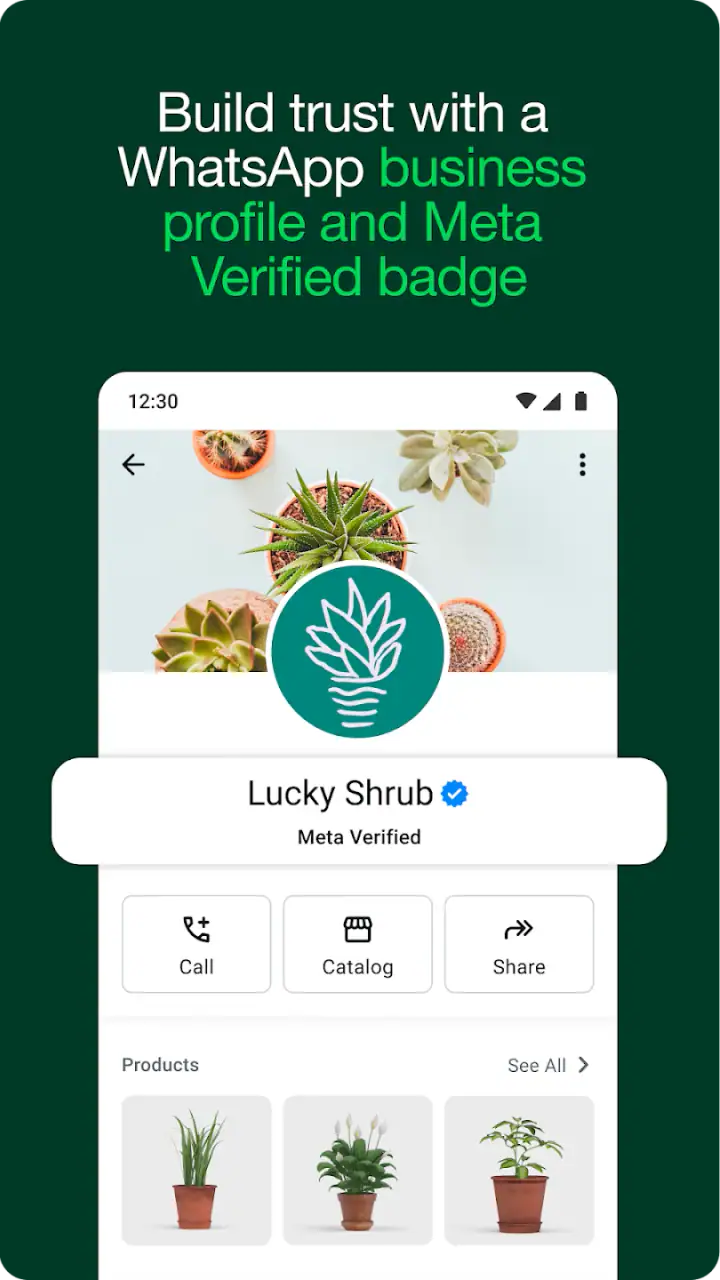
WhatsApp Business is designed for small business owners to interact with their customers more effectively. Unlike the regular WhatsApp app, it includes features like business profiles, automated messages, and labels for organizing chats. It allows businesses to establish a professional presence and provides tools to enhance customer communication.
Is WhatsApp Business free to use?
Yes, WhatsApp Business is a free app available for download on both Android and iOS devices. While the core functionalities are free, there may be charges for additional services like WhatsApp Business API, which is used by larger businesses to integrate with their customer support systems.
Can I use WhatsApp Business and regular WhatsApp on the same phone?
Yes, you can use both WhatsApp Business and regular WhatsApp on the same phone, but you need to register each app with a different phone number. This allows you to manage personal and business interactions separately without needing two devices.
What features does WhatsApp Business offer for customer interaction?
WhatsApp Business offers several features to streamline customer interaction, including automated greeting and away messages, quick replies for frequently asked questions, and labels to organize and categorize chats. These tools help businesses respond quickly and efficiently to customer inquiries.
Is my data secure with WhatsApp Business?
WhatsApp Business uses the same end-to-end encryption as regular WhatsApp, ensuring that messages are secure and can only be read by the sender and recipient. However, businesses need to be mindful of how they handle customer data and comply with privacy regulations applicable to their region.
Pros
- Easy integration with existing WhatsApp contacts.
- Labels help organize customer interactions.
- Automated messages save time and effort.
- Access to messaging statistics for insights.
- Seamless transition from personal to business account.
Cons
- Limited customization for automated messages.
- No support for multiple users on a single account.
- Requires a separate phone number from personal WhatsApp.
- Lacks advanced analytics compared to competitors.
- No built-in payment processing options.


